What is a social story? Learn more below and find our best tips for making effective stories for the kids in your home, classroom, or therapy practice!

Navigating social situations and daily routines can be tricky for kids, especially those with autism, ADHD, or other developmental differences. Social stories can help!
What is a Social Story?
A social story is a simple, engaging short story that can help children understand expectations and emotions and generate regulated responses in a variety of situations—whether it’s taking turns, handling big feelings, going to the doctor, or going to the grocery store.
While social stories are often used with autistic children, they are actually a tool that we recommend using for all children when they’re struggling with a certain situation or challenge.
Social stories break down concepts and situations into clear, positive, step-by-step explanations, making them a powerful tool for teaching skills in a way that feels supportive rather than overwhelming. They give kids the confidence to navigate new or challenging experiences, easing anxiety and promoting independence by:
-Explaining what’s coming next
-Explaining how situations are likely to play out
-Providing a predictable script or predetermined options for actions they can take to maintain regulation and feel calm and at ease
-Reinforcing actions and behaviors surrounding safety concerns
In this post, we’ll explore how social stories work and how to create your own for everyday challenges. Whether you’re a parent, teacher, or therapist, these simple stories can make a big difference! Keep reading to learn more.
Social Story Tips
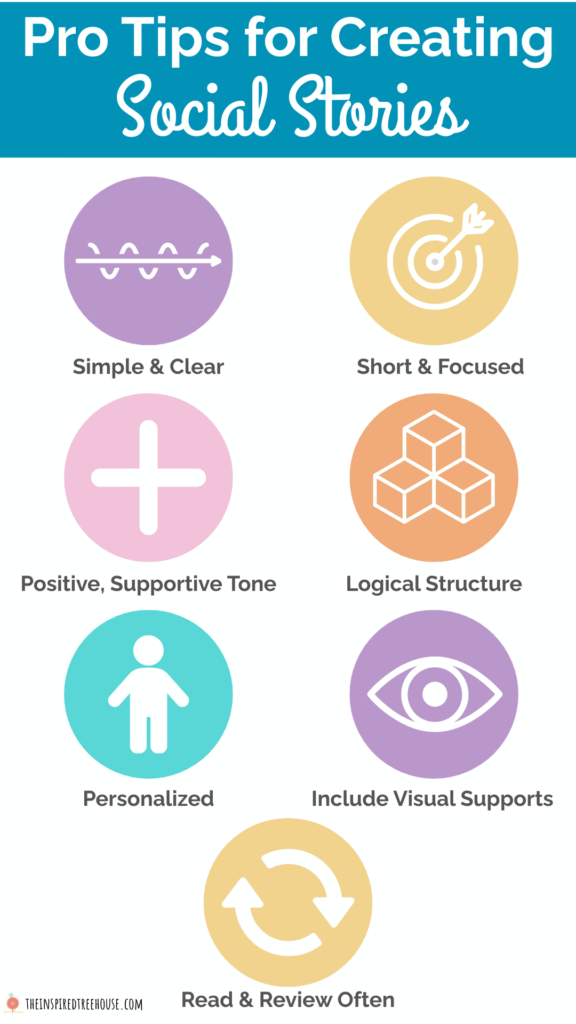
Creating effective social stories requires thoughtful structure and a clear, supportive approach. Here are some key guidelines to follow:
1. Keep the Story Simple and Clear
Use short, direct sentences or phrases that explain a situation and options for actions the child can take to help maintain regulation, stay safe, and keep others safe too (e.g. asking an adult for help, taking a break, using a sensory tool, etc.). It’s usually best to limit the story to one or two sentences per page.
2. Use a Positive, Supportive Tone
Frame the story in positive language rather than focusing on what not to do. Instead of “I do not hit my friends,” the social story could read: “When I playing, I use gentle hands with my friends and toys.” or “If I get mad at my friend, and I feel like I want to hit, I can ______(fill in options).”
3. Follow a Logical Structure
A good social story typically includes:
-A clear explanation of the situation
-Descriptions of the child’s common feelings or reactions to the situation
-Guidance for choices or possible responses to the situation that are safe and healthy for the child and everyone else in the situation
4. Include Visual Supports
Include simple illustrations, real-life photos of the child, or icons with the text to help ensure understanding, especially for young children or visual learners.
Social stories can also be provided in video format, which can be more engaging for kids who have difficulty attending to a story that is read aloud. We’ve found this to be an extremely effective strategy for quickly and easily making personalized social stories for kids.
5. Personalize It
Use the child’s name and make the story specific to their situation with pictures/videos. Ideally, every social story should be individualized to the child’s circumstances and responses to situations.
6. Keep It Short and Focused
Focus on only one topic per story and avoid unnecessary details and words to keep it simple.
7. Read and Review Often
Consistency is key! Encourage caregivers and others to read the social story with the child before a challenging situation occurs and to review it regularly to reinforce learning. This is actually a great co-regulation strategy!
8. Prioritize the Child’s Individual Needs
Keep in mind that social stories should be built around each child’s needs. This means honoring and acknowledging neurodivergent kids’ special interests, sensory needs, and preferred self-regulation tools and activities. These stories are not meant to extinguish behaviors to make neurodivergent kids appear neurotypical. Instead, they are designed with the child’s safety and well-being in mind.
Other Resources About Social Stories
Check out this free library of social stories from Autism Little Learners!
And you can find even more free social stories here, from And Next Comes L.
Check out this article from Head Start – What is a Social Story and How to Use Social Stories.
Learn more about other tools that can support kids, including visual schedules, visual timers, and our favorite executive functioning strategies.