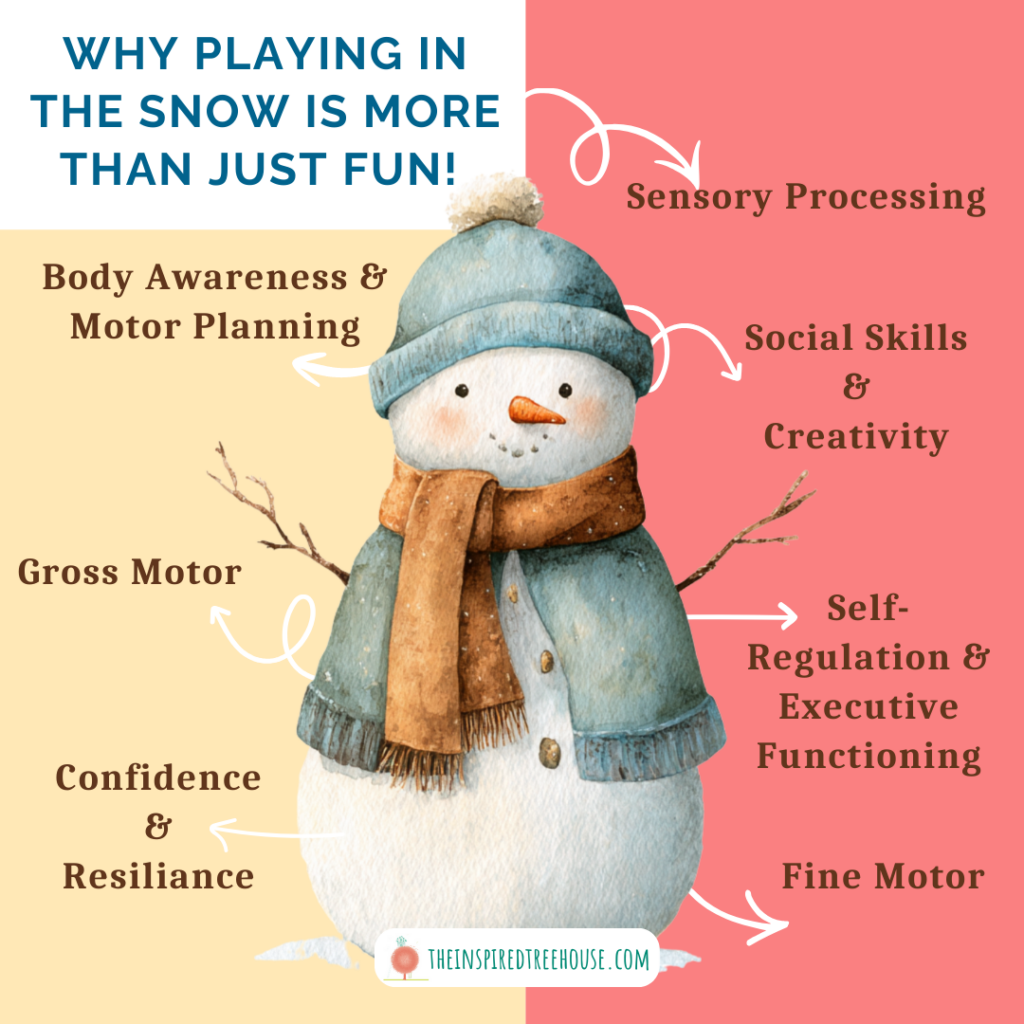
Snow days aren’t wasted days. When kids head outside to play in the snow, they’re not just burning energy—they’re building strong bodies, flexible brains and tons of problem solving skills.

At The Inspired Treehouse, we believe the best learning happens through play—and snow play is one of the most powerful (and joyful!) examples of this. Let’s break down why snowy play supports development from head to toe.
Why Playing in the Snow Is So Good for Kids’ Development
Playing in the snow instantly transforms the environment, turning everyday movement into a full‑body challenge. That challenge is exactly what helps kids grow.
Snow play supports:
-Gross motor development
-Sensory processing and regulation
-Motor planning and problem‑solving
-Fine motor strength
-Social‑emotional skills
And the best part? Kids don’t even know they’re learning.
Playing in the Snow Builds Strength, Balance, and Coordination
Walking, running, climbing, and sledding in snow requires more effort than typical outdoor play. Snow adds resistance and instability—two key ingredients for building strength and balance.
Kids naturally work on:
-Core and leg strength
-Dynamic balance
-Coordination and endurance
Think of snow as a giant outdoor obstacle course—no equipment required. For more intentional movement ideas, try turning your yard into a snowy obstacle course using simple challenges like stepping paths, snow mounds, and crawl‑through tunnels.
Playing in the Snow Provides Powerful Sensory Input
Snow offers rich sensory experiences: cold temperatures, crunchy and slippery textures, bright visual contrast, and changing sounds underfoot.
This type of input helps children:
-Build body awareness (proprioception)
-Improve sensory processing
-Practice self‑regulation in a changing environment
-For many kids, snow play is organizing and calming—even if it looks wild on the outside.
👉 Related resource: Snow Themed Activities Pack
Playing in the Snow Encourages Motor Planning and Problem‑Solving
Snow is unpredictable. Every step, jump, and throw requires kids to plan, adjust, and try again.
Questions kids are solving in real time:
-“How do I keep my balance?”
-“How hard do I throw this snowball?”
-“What happens if I jump here?”
That trial‑and‑error learning is essential for developing motor planning and confidence. Movement stories with a snowy theme can add structure while keeping play imaginative.
👉 Related post: Snowy Day Movement Game for Kids
Playing in the Snow Supports Fine Motor Development
Yes—even with mittens on! Packing snow, scooping, shaping snowballs, building snowmen, and managing zippers and gloves all strengthen the small muscles of the hands.
Snow play supports:
-Hand strength
-Bilateral coordination
-Dexterity needed for writing and daily tasks
-Snow‑themed crafts and printables are a great way to extend this learning indoors.
👉 Related post: Super Simple Snowflake Craft
Snow Play Builds Social and Emotional Skills
Snow naturally invites collaboration. Kids build together, take turns sledding, create rules for games, and navigate frustrations when things don’t go as planned.
Through snow play, kids practice:
-Communication
-Cooperation
-Emotional regulation
-Flexibility and resilience
And when it’s too cold to head outside, snowy movement games indoors can keep bodies moving and emotions regulated.
👉 Related post: FREE Printable Snowman Charades Movement Game
Snow Days Are Learning Days
Snow play supports the whole child—physically, emotionally, socially, and cognitively. It’s playful. It’s challenging. And it’s exactly the kind of experience kids need.
So bundle up, head outside, and let kids play.
Because snow play isn’t just fun—it’s building strong, confident, capable kids ❄️
Try these snowy play ideas to build all of these skills and more!